October 2, 2026 · 7 min read · Agentive Scale
Digital Marketing for Restaurants: A Practical Plan for More Reservations
Restaurant marketing works when local search, strong food content, reviews and a frictionless reservation path turn nearby demand into profitable covers.
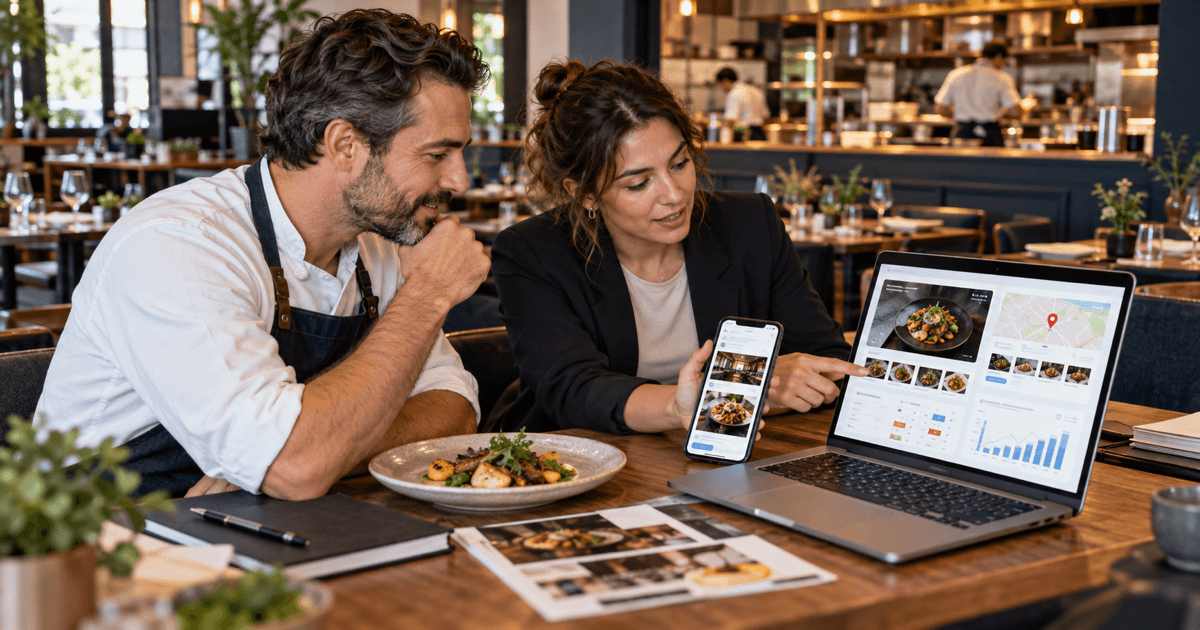
Digital marketing for restaurants is not a contest for the prettiest Instagram grid. Its job is to help the right guest discover the restaurant, trust what they see and complete a reservation, direct order or visit at a profitable cost.
A neighborhood restaurant, a destination dining room, a tourist venue and a delivery-first kitchen need different plans. The common foundation is accurate local information, an appealing but honest presentation, clear menu and pricing, recent reviews, and a short path from interest to action.
Start with the business problem, not the channel
Define the empty capacity before buying attention. A restaurant may need weekday lunch traffic, Tuesday dinner covers, private events, higher-value reservations, direct pickup orders or repeat visits. “More followers” does not say which seats need filling or what a new guest is worth.
Calculate average check, gross contribution after food and variable labor, typical party size, table turns, no-show rate and the hours with spare capacity. A campaign that fills an already sold-out Saturday creates little value. A campaign that reliably adds 20 profitable Wednesday covers can be excellent even with modest reach.
Separate audiences too. Nearby residents may respond to lunch and convenience; tourists need location, language and confidence; families care about space and menu clarity; companies need group options and invoicing. One generic post cannot answer every decision.
Google Maps and local SEO capture ready-to-visit demand
People search “restaurant near me,” “best brunch,” “seafood restaurant,” “restaurant open now” and cuisine plus city or neighborhood. The Google Business Profile should show the correct category, address pin, phone, hours, holiday hours, reservation URL, menu, attributes and current photographs.
Do not stuff the business name with keywords. Use the real name and make relevance clear through categories, services, website pages, menu text and consistent information across reputable listings. Update seasonal hours before the guest travels.
For a New York neighborhood restaurant, location pages are rarely needed for every nearby block. A restaurant group with real venues can create one useful page per location. Each page should contain its actual menu, address, transport or parking notes, accessibility information, photographs and reservation route rather than copied city text.
Reviews influence both discovery and conversion. Ask real guests at a natural moment, make the review path easy and reply calmly. Never buy reviews or pressure guests for only positive feedback. A simple NFC card or QR review prompt can reduce friction when staff uses it appropriately.
The website must answer the decision in seconds
A restaurant website needs a mobile-first menu that can be read without downloading a giant PDF. Show current prices, dietary markers, opening hours, address, phone, atmosphere, reservation policy and the main action above the fold. Compress photographs so appetite does not come at the cost of a slow page.
Use separate paths for reservations, direct ordering, private events and gift cards when those are real revenue lines. A person planning a wedding dinner should not hunt through an Instagram bio. A tourist should know whether the booking is confirmed and in which time zone.
The reservation system should pass campaign parameters where possible, confirm the booking, explain deposits or cancellation terms and work on a small screen. Measure completed reservations rather than button clicks. If a third-party platform owns the final step, compare its reported bookings with the restaurant’s actual book.
Food photography and video need a content system
Strong restaurant content covers more than close-ups. Build a library around signature dishes, preparation, chef or owner, service team, room, terrace, drinks, sourcing, group occasions and common questions. Show an honest portion and atmosphere so the visit matches the promise.
One organized shoot can produce vertical videos, short cutdowns, photographs, story sequences, website assets and ad variations. Plan the shot list from commercial needs: lunch, tasting menu, private room, delivery packaging or seasonal terrace. Capture clean ambient sound and permission from identifiable guests.
Organic content keeps the restaurant familiar. Paid content needs a sharper proposition and action. Test different openings, dishes, people and occasions. Repeating the same cinematic video for six months usually teaches less than a set of clear concepts.
Instagram and Facebook create demand
Meta is useful when food, atmosphere or an event can create desire before someone searches. Target the realistic service area for local dining and separate tourists or special occasions when the economics justify it. Broad regional reach is waste if the guest will not travel.
Promote a specific reason to act: a new menu, weekday lunch, live event, chef collaboration, terrace opening or available holiday dates. Send the click to the relevant reservation or event page, not a generic homepage. Retarget recent site visitors, video viewers or booking abandoners only when the audience is large enough and consent is handled correctly.
Keep media spend separate from management and production. The detailed Facebook and Instagram advertising cost guide explains the difference between platform budget, agency work, creative and landing pages.
Google Ads captures explicit intent
Search ads can work for queries such as cuisine plus area, private dining, group dinner, catering or a high-value event. Protect budget with tight geography, useful negative keywords, honest ad copy and a landing page matching the search.
Do not pay broadly for “food” or send every keyword to one page. Separate ordinary dining, events and delivery because the value and intent differ. Brand campaigns should be reported separately from new-customer acquisition; someone already searching the restaurant name is not the same as a new guest.
Use call, direction and reservation outcomes, then reconcile them with actual bookings. Our Google Ads cost guide shows how media budget and management fees should be planned independently.
Delivery platforms and direct orders need separate economics
Marketplace apps can provide reach and logistics, but commission, discounts, packaging and refunds change the margin. Track marketplace revenue separately from direct orders. Do not call an order profitable before subtracting food, packaging, delivery contribution, promotion and platform fees.
A direct ordering system can improve ownership and repeat communication, but it must be convenient. Use realistic preparation times, clear service areas and a reliable support process. The cost of building the commerce layer is covered in the online store pricing guide.
A practical restaurant marketing budget
For an independent U.S. restaurant, a working monthly plan may look like this:
| Item | Typical planning range |
|---|---|
| Local SEO, listings and reporting | $400–$1,200 |
| Social management and creative adaptation | $600–$1,800 |
| Photo or video production | $500–$2,500 per shoot |
| Google and Meta media | $500–$3,000+ |
| Website, booking or tracking improvements | scoped separately |
These are planning ranges, not platform minimums or promised prices. A small cafe may focus on Maps and one monthly shoot. A multi-location group needs location governance, more creative, larger media and stronger analytics. Budget should follow available capacity and contribution margin.
Measure covers and profit, not vanity metrics
Create one weekly view of reservations by source, covers, no-shows, direct orders, event inquiries and revenue. Add known media, agency, production, discount and platform costs. Likes, reach, CTR and CPC explain what happened; they do not prove business value.
Use tagged booking links, campaign-specific phone numbers where appropriate, reservation source fields and point-of-sale notes. Ask new guests how they heard about the restaurant, but treat the answer as supporting evidence because memory is imperfect.
Watch incrementality. A branded search ad may claim a reservation that would have happened organically. A holiday campaign may coincide with demand that existed anyway. Compare similar periods, capacity and offers before declaring a channel successful.
A 90-day action plan
Days 1–30: correct the Google profile, menu, hours, booking path and tracking. Photograph the current experience. Define capacity gaps, guest groups and the value of a cover. Reply to recent reviews and fix the most repeated operational complaint.
Days 31–60: publish serviceable local pages, launch a focused search or social test and create several distinct content concepts. Train staff on reservation source and review requests. Check which inquiries become real covers.
Days 61–90: move budget toward profitable occasions, refresh weak creative and improve the booking page. Build a repeat-guest list only with proper permission. Document what fills which period so the next seasonal campaign starts before demand peaks.
Common mistakes
- posting daily without a reservation objective;
- showing an outdated menu or incorrect hours;
- buying followers or reviews;
- discounting during already full periods;
- measuring clicks instead of confirmed covers;
- using one campaign for dining, delivery and events;
- relying entirely on a marketplace or social platform;
- ignoring slow replies, no-shows and the in-restaurant experience.
Marketing cannot compensate for inconsistent food, service or availability. It can make a strong experience easier to find and easier to choose.
How to choose a restaurant marketing partner
Review the arrangement quarterly against capacity, margin and operational changes. A channel that worked during patio season may need a different role in winter, and a campaign should slow when the team cannot maintain the promised experience.
Ask the partner to document experiments, rejected ideas and the reason behind each budget change. That record prevents the next season from repeating the same expensive lessons and helps a new manager understand what guests actually responded to.
Ask for a plan tied to capacity, margin and actual reservations. The proposal should separate strategy, profile management, content production, website work, media spend and reporting. The restaurant should own its domain, website, Google profile, social accounts, ad accounts, creative files and customer data.
Agree on who updates hours and menus, who replies to reviews, how quickly booking problems are escalated, how filming is approved and which metric decides whether a campaign continues. If you need a local growth plan built around profitable covers, book a conversation.
Frequently asked questions
How much should a restaurant spend on digital marketing?
A focused independent restaurant often starts with $1,000–$4,000 per month across management, content and paid media. The right amount depends on average check, seat capacity, location, season and whether the goal is reservations, delivery or events.
Does a restaurant need a website if it has Instagram?
Yes. Instagram creates discovery, while a fast website gives guests a reliable menu, hours, location, dietary information and a direct reservation or ordering path. The restaurant owns that experience and can measure it.
Which channel works best for restaurant marketing?
Google Maps and local search usually capture the strongest existing intent. Instagram and Meta ads create appetite and awareness. The best mix depends on whether the restaurant needs nearby covers now, tourist demand, events, delivery or repeat visits.
How can a restaurant measure marketing results?
Track confirmed reservations, occupied covers, direct orders, event inquiries, repeat visits and contribution margin. Use booking data, call tracking, UTM links, offer codes and point-of-sale notes instead of judging only likes or clicks.
How often should a restaurant create new content?
Consistency matters more than daily posting. One planned shoot can produce several weeks of dishes, preparation, people, atmosphere and guest-question content. Refresh paid creative when the audience tires or the menu, season or offer changes.